|
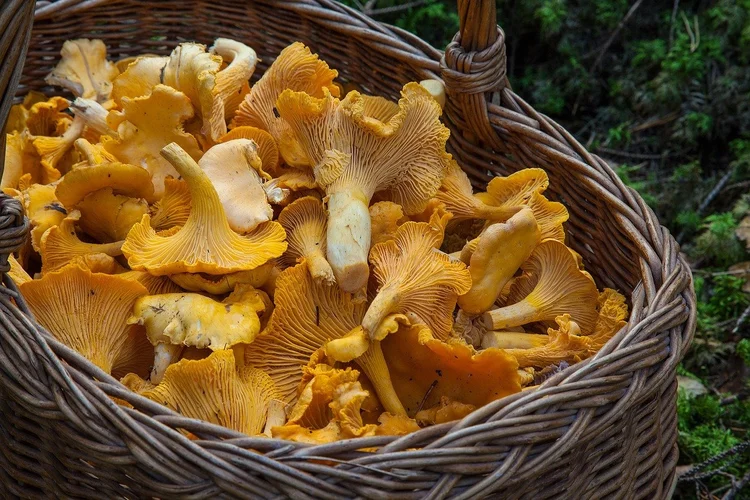
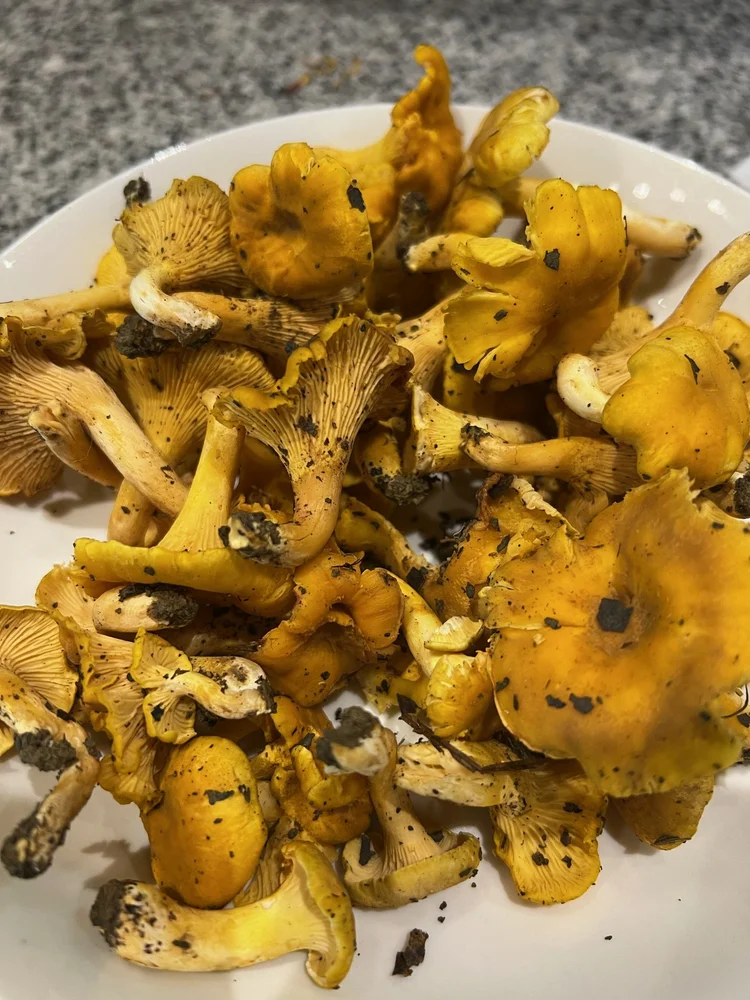
These are popular mushrooms and ones that you will have to find out in the wild because we do not cultivate them! We’ll tell you why, but first let’s learn a little bit about these guys, shall we? Chanterelles, genus Chanterelles, grow during the summer months (June - September) all over the United States. There are many different species, but more common ones of this are are the Golden Chanterelle, Cantharellus cibarius, and the Smooth Chanterelle, Cantharellus lateritius. These chanterelles are yellow to orange in color, and we have been finding more pale-orange Chanterelles on the farm. Chanterelles have a vase-like or funnel shape with a cap that is sometimes convex, sometimes wavy. Notably, they have fake gills running down the stem. Fake gills are more like ridges; being thicker, wavy and forked compared to true gills found on look-alike mushrooms. Once you find one, keep looking around and you’ll most likely find more. Chanterelles are foraged because they are so delicious: a fruity taste reminiscent of apricots. So why don’t we grow them? Because Chanterelles are mycorrhizal mushrooms and rely on a relationship with trees. The fungi have a large mycelial network underground that expands throughout the forest and can infiltrate tree roots. This is a good thing! The fungi can then provide the tree with nutrients (like nitrogen) that the mycelium could reach, but the tree roots were not able to. In return, the tree offers sugars to the fungi. This symbiotic relationship is difficult to replicate in a controlled manner, so we allocate our efforts elsewhere. It makes the foraged-find that much sweeter! Since they have that large network of mycelium, when you find them, do not be concerned about over-harvesting. Most of the mushroom is protected underground anyway. You could harvest every single mushroom you see, and next year (or maybe next week) just as many fruits will arise - granted the weather maintains ideal conditions for the mushrooms. You’ll have the best luck 2-4 days after a rain fall. We wish you some mushroom-finding success! Keep in mind, there are many poisonous mushrooms out there, so make sure you have the right species. Consult with an expert.
|